
Getting into the field.
The inspiration to want to make a difference.
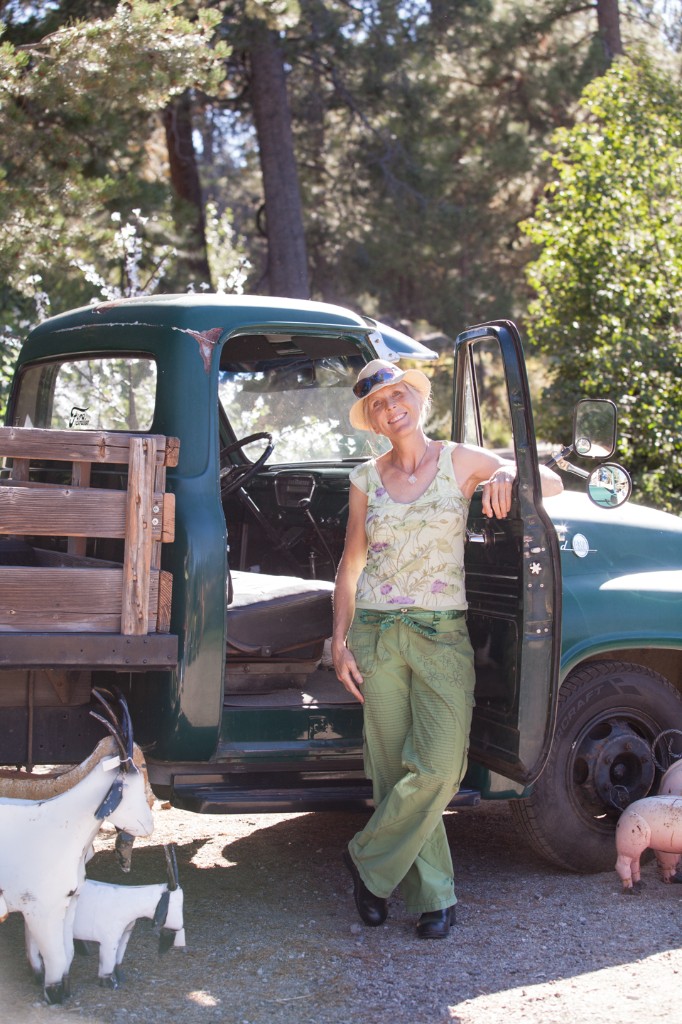
"How could we get more farmers farming this way?"
Susie Sutphin
On June 1, 2011, I embarked upon a quest to become better acquainted with our food system. I was joining the legion of others who were doing their part to create a healthier and more resilient food economy. I had quit my job and rented my house in order to get into the fields and learn as much as I can about our food system.
I crafted a self-prescribed education program where I worked on farms, took courses, read books and interviewed farmers and sustainability experts. At the end of six months, I returned home to North Lake Tahoe, CA to help my mountain community become more focused on its food security and implement strategies to build a regional food system.
With the help of many people, businesses, farmers and organizations, the 501c-3 non-profit, Tahoe Food Hub, was born and started moving local produce and proteins on June 13, 2013!
The Back Story…
On May 9, 2008, I read an article on Grist.org. It was an interview with Timothy LaSalle, Rodale Institute’s Executive Director at the time. His premise was, “farmers should be recognized as potential climate change heroes.” I went on to learn about regenerative farming, mychorrhiza fungi, and how conventional farming is counter intuitive to soil’s natural ability to sequester carbon. It was such a simple concept. I said to myself, “How could we get more farmers farming this way?”
At the time I was working for the Wild & Scenic Film Festival which is the largest environmental film festival in the US. At our January 2010 festival in Nevada City, CA, our theme was agriculture. Throughout 2009, we were flooded with amazing stories of what was happening in the food movement across the country. We screened, Food Inc., FRESH, What’s Organic About Organic, Dirt, Food Fight, Polycultures, Homegrown, Greenhorns, and Soil in Good Heart to name a few.
I already ate organic, belonged to a CSA, composted, grew my own vegetables and had a pretty good understanding for what was wrong in our food system, such as reading articles like the one about soil integrity. But it wasn’t until that film season when I started to make all the connections. It affected me profoundly and I knew I wanted to start steering my career path in that direction.
I worked for Wild & Scenic for five years developing and managing the national tour program. It had 10 venues when I started in 2006 and grew to over 110 by 2011. The tour works with local grassroots organizations who host the festival as a way to outreach into their community. What better way to increase the groundswell for the environmental movement than to invigorate the capacity of local enviro groups with new activists!
After watching over 250 films every year for five years, it was not enough anymore to just inspire others. I too was inspired and wanted to get my hands dirty, literally. Out of all the issues we feature in our films, food and agriculture is the one that has resonated with me the most. I think the April 2009 issue of Mother Jones said it best, “Want to Fix the Country? Fix the Food!”
And that’s where my story began…pursuing a career in “sustainable food systems.” I am thankful for my curiosity and where it led. On October 15, 2012, the Tahoe Food Hub was incorporated as a non-profit with the state of California, a board was formed shortly after, and on June 13, 2013, officially opened with five farms and five restaurants connecting local farmers with regional markets and communities.
Since its inception, Tahoe Food Hub has increased market access for more than 50 farms and ranches within 150 miles of Truckee and serves residents, schools, restaurants, hospitals and grocery stores from Quincy and the Sierra Valley to Lake Tahoe and Reno. What started as one person’s curiosity about the power of soil has grown into a thriving network working to restore the health of our food system from the ground up.
When I founded the Tahoe Food Hub, I wanted to create a non-profit organization which supported farms using these restorative, sustainable farming practices. It was my hope that a food hub could increase the market potential for local, sustainably-grown food and help local farms receive a fair price. With increased access to new markets, more farms would want to farm using these ecological techniques. More farms would mean more carbon sequestered. More carbon sequestered would mean we have a fighting chance against climate change.